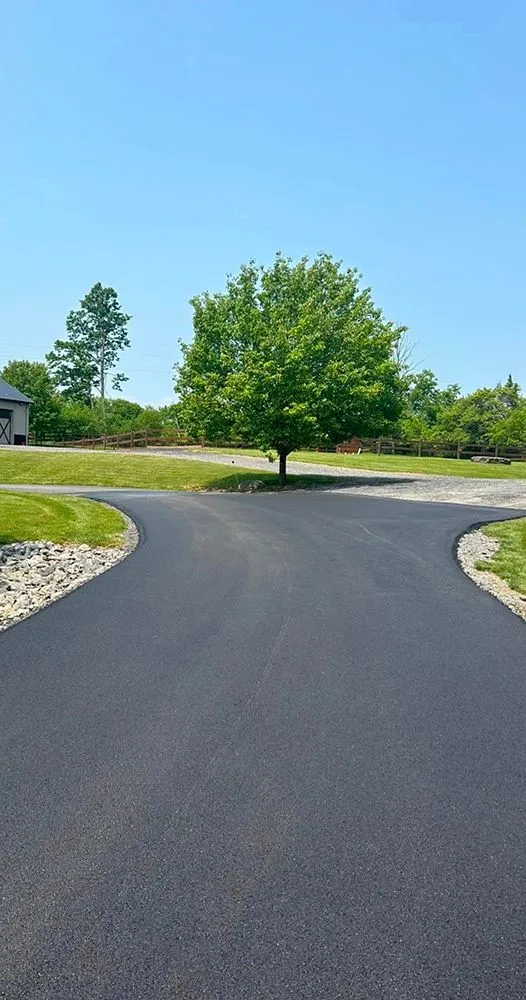
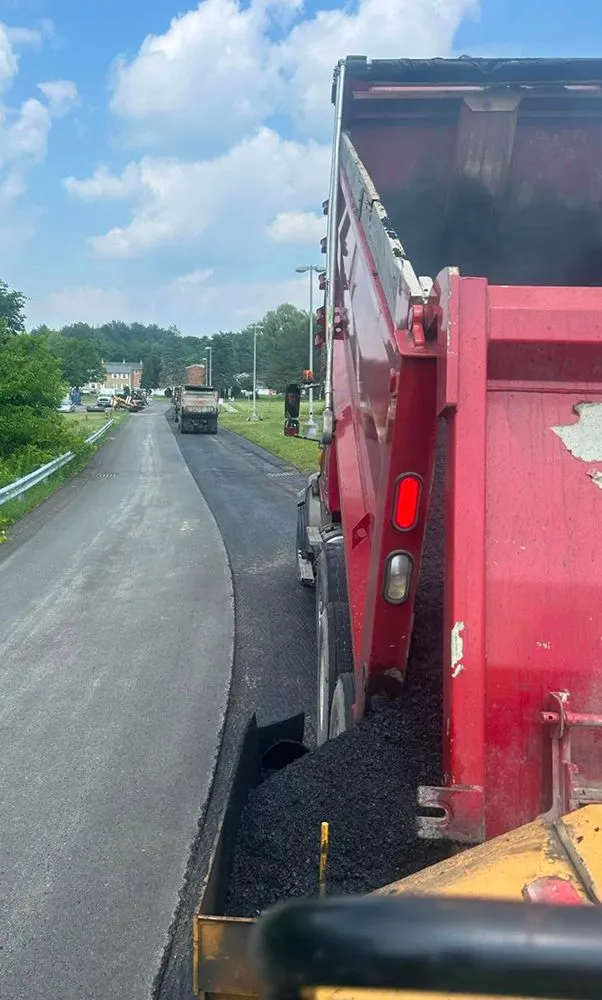
For homeowners, driveway paving is one of the most common asphalt projects in Gansevoort. RDM installs new driveways, replaces failed blacktop, converts gravel driveways to asphalt and widens existing paved areas for additional parking or improved access.A durable driveway begins with a stable foundation.
Before paving, we look at the existing surface, underlying stone, soft areas, slope, drainage, road transition and how the driveway is used. A short residential driveway that handles passenger vehicles may need a different approach than a long private lane regularly used by delivery trucks, trailers, service vehicles or agricultural equipment.
Asphalt Driveway Replacement
Full replacement becomes appropriate when deterioration is no longer limited to the surface. Widespread interconnected cracking, repeated potholes, deep settlement, heaved areas and soft sections can indicate that the pavement base has failed.
For these projects, RDM can remove the deteriorated asphalt, inspect the material underneath, rebuild weak areas, regrade the driveway and install a new surface. The goal is to correct the cause of the failure rather than install new asphalt over an unstable foundation.
Gravel Driveway to Asphalt Conversion
Long gravel and stone driveways are common on rural properties throughout northern Saratoga County. Converting one to asphalt can reduce rutting, washboarding, loose stone and repeated grading, but the existing gravel is not automatically ready to pave over.
We inspect the depth, compaction and drainage of the existing stone base first. Stable aggregate can sometimes remain as part of the pavement foundation, while weak, muddy or contaminated sections may need to be excavated and rebuilt before asphalt is installed.Some driveways are past the point where any surface-level fix will hold.
Alligator cracking across large sections, pavement that flexes underfoot when you walk it, or spots that have visibly heaved and settled: these are symptoms of base failure, not surface wear. Putting new asphalt over a failed base is money wasted.
Asphalt Paving for Long Rural Driveways and Private Roads
Gansevoort and Northumberland include larger rural properties where a driveway may function more like a private road than a short residential approach. Longer paved surfaces create additional considerations because small drainage or grading problems can affect hundreds of feet of pavement.
On rural properties, the best paving plan may include localized excavation, additional aggregate, shoulder work, culvert improvements or regrading before asphalt is installed. Those improvements are easier and more cost-effective to address before the finished surface goes down.
Asphalt Paving for Farm and Agricultural Properties
The Town of Northumberland identifies agriculture as a major part of the local community, and rural properties around Gansevoort may need pavement that supports more than normal residential traffic. Farm entrances, equipment access areas, long lanes and shared drives can see repeated loads from tractors, trailers, deliveries and service vehicles.
Commercial or agricultural access should be designed around actual vehicle use instead of being treated as an oversized residential driveway.
Resurfacing vs. Full Asphalt Replacement
Not every worn driveway or parking lot needs to be removed. Asphalt resurfacing, also called an overlay, installs a new asphalt layer over an existing paved surface that is still structurally capable of supporting it. Resurfacing may make sense when
The existing pavement is generally stable.
Surface oxidation and moderate cracking are the main problems.
There are no widespread soft or pumping areas.
Drainage and elevations can still work with an added asphalt layer.
Commercial Asphalt Paving in Gansevoort, NY
RDM also provides commercial asphalt paving for businesses, managed properties, apartment and multifamily sites, industrial properties and other commercial facilities throughout Gansevoort and northern Saratoga County.
Commercial paving projects may include parking lots, access roads, entrance lanes, drive aisles, loading areas, pavement expansions, private roads and new-construction paving.
These surfaces often see heavier traffic and more repetitive loading than residential driveways, so the foundation and pavement design should reflect how the site actually operates.
When the base remains sound, a commercial property may be able to extend the life of its pavement through targeted repairs, milling and resurfacing instead of complete reconstruction. Milling is particularly useful where elevations must be maintained near entrances, curbs, drainage structures or adjacent concrete.
![[background image] image of construction equipment (for a construction company)](https://cdn.prod.website-files.com/69f9347c3f31317dd33a8d92/6a0279f85cbe6ce73070177a_Ronnie%205.webp)
![[background image] image of construction equipment (for a construction company)](https://cdn.prod.website-files.com/69f9347c3f31317dd33a8d92/6a027dc13ce48c6663f73da9_9408a769bc19b8a3de7eb7b0dfc5f327_IMG_1756.png)
![[background image] image of highway at dawn](https://cdn.prod.website-files.com/69f9347c3f31317dd33a8d92/6a027b30f1f984d393a95070_Line%20Striping.jpg)